There's a Book for That: Years
 Welcome 2026, and with it our hopes and intentions for health and happiness. As we contemplate the year ahead, it’s meaningful to consider what’s come before. As The New York Times bestseller 1929 by Andrew Ross Sorkin illustrates, pivotal years in our history have ripple effects and lessons for today. In fiction and nonfiction, the following authors have taken on a year at a time in their acclaimed books:
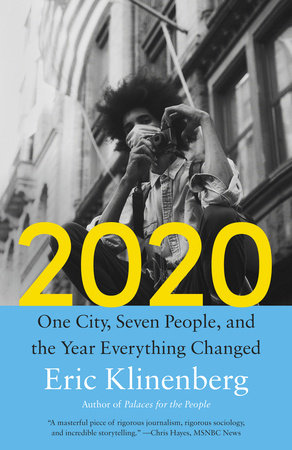
2020 will go down alongside 1914, 1929, and 1968 as one of the most consequential years in history. This riveting and affecting book is the first attempt to capture the full human experience of that fateful time.

Written when landing on the moon was still a dream, 2001: A Space Odyssey is a science-fiction classic that has changed the way we look at the stars—and ourselves. On the moon, an enigma is uncovered. So great are the implications that, for the first time, men are sent deep into our solar system. But before they can reach their destination, things begin to go very wrong. From the savannas of Africa at the dawn of mankind to the rings of Saturn at the turn of the 21st century, Arthur C. Clarke takes us on a journey unlike any other. Brilliant, compulsive, and prophetic, and the basis for the immensely influential Stanley Kubrick film, 2001: A Space Odyssey tackles the enduring theme of man’s—and technology’s—place in the universe and lives on as a landmark achievement in storytelling.
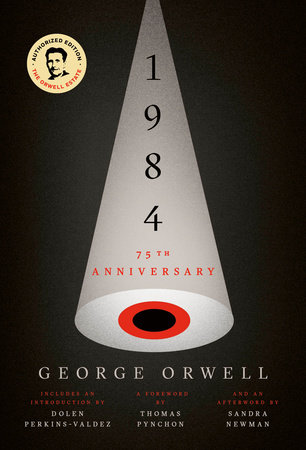
1984 was George Orwell’s chilling prophecy about the future. And while 1984 has come and gone, his dystopian vision of a government that will do anything to control the narrative is timelier than ever…
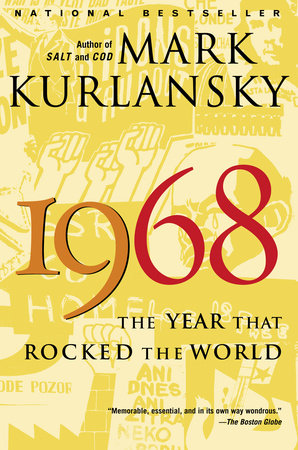
To some, 1968 was the year of sex, drugs, and rock and roll. Yet it was also the year of the Martin Luther King, Jr., and Bobby Kennedy assassinations; the riots at the Democratic National Convention in Chicago; Prague Spring; the antiwar movement and the Tet Offensive; Black Power; the generation gap; avant-garde theater; the upsurge of the women’s movement; and the beginning of the end for the Soviet Union. In this monumental book, Mark Kurlansky brings to teeming life the cultural and political history of that pivotal year, when television’s influence on global events first became apparent, and spontaneous uprisings occurred simultaneously around the world. Encompassing the diverse realms of youth and music, politics and war, economics and the media, 1968 shows how twelve volatile months transformed who we were as a people—and led us to where we are today.
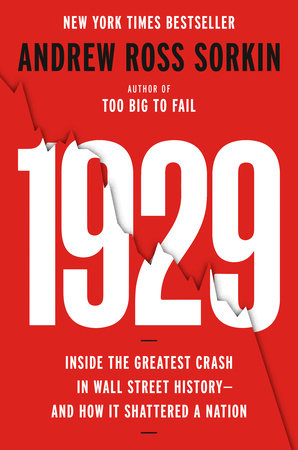
This is not just a story about money. 1929 is a tale of power, psychology, and the seductive illusion that this time is different. It’s about disregarded alarm bells, financiers who fell from grace, and skeptics who saw the crash coming—only to be dismissed until it was too late. Hailed as a landmark book, Too Big to Fail reimagined how financial crises are told. Now, with 1929, Sorkin delivers an immersive, electrifying account of the most pivotal market collapse of all time—with lessons that remain as urgent as ever. More than just a history, 1929 is a crucial blueprint for understanding the cycles of speculation, the forces that drive financial upheaval, and the warning signs we ignore at our peril.
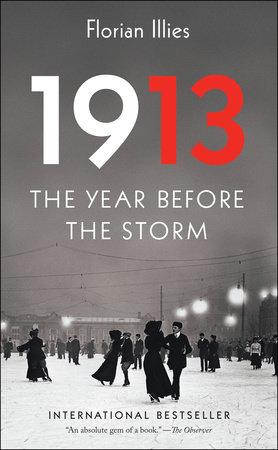
It was the year Henry Ford first put a conveyer belt in his car factory, and the year Louis Armstrong first picked up a trumpet. It was the year Charlie Chaplin signed his first movie contract, and Coco Chanel and Prada opened their first dress shops. It was the year Proust began his opus, Stravinsky wrote The Rite of Spring, and the first Armory Show in New York introduced the world to Picasso and the world of abstract art. It was the year the recreational drug now known as ecstasy was invented.
It was 1913, the year before the world plunged into the catastrophic darkness of World War I.
“An utterly delicious treat or an ideal present for anyone even mildly interested in 20th-century art, music and literature . . . a sexy, comic and occasionally heartbreaking soap opera.” —Michael Dirda, The Washington Post
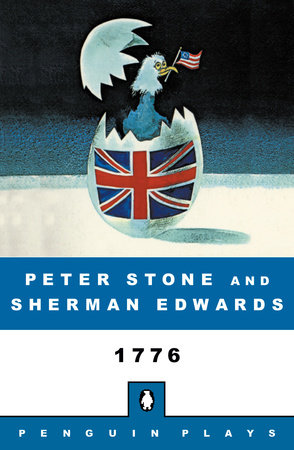
Winner of five 1969 Tony Awards, including Best Book and Best Musical, this oft-produced musical play is an imaginative re-creation of the events from May 8 to July 4, 1776 in Philadelphia, when the second Continental Congress argued about, voted on, and signed the Declaration of Independence.
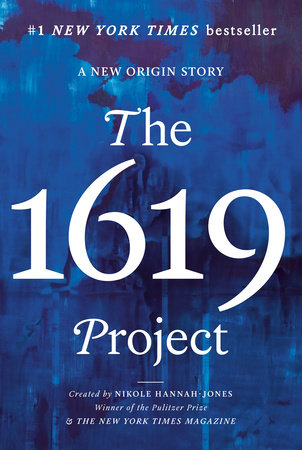
The New York Times Magazine’s award-winning 1619 Project issue reframed our understanding of American history by placing slavery and its continuing legacy at the center of our national narrative. This book substantially expands on that work, weaving together eighteen essays that explore the legacy of slavery in present-day America with thirty-six poems and works of fiction that illuminate key moments of oppression, struggle, and resistance.
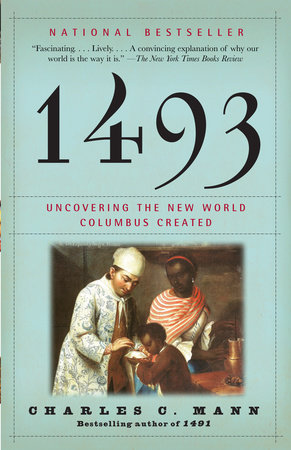
Presenting the latest research by biologists, anthropologists, archaeologists, and historians, Mann shows how the post-Columbian network of ecological and economic exchange fostered the rise of Europe, devastated imperial China, convulsed Africa, and for two centuries made Mexico City—where Asia, Europe, and the new frontier of the Americas dynamically interacted—the center of the world. In this history, Mann uncovers the germ of today’s fiercest political disputes, from immigration to trade policy to culture wars. In 1493, Mann has again given readers an eye-opening scientific interpretation of our past, unequaled in its authority and fascination.
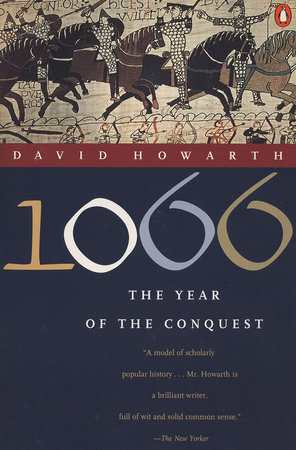
The year 1066 is one of the most important dates in the history of the Western world: the year William the Conqueror defeated the English at the Battle of Hastings and changed England and the English forever. The events leading to-and following-this turning point in history are shrouded in mystery. Drawing on a wealth of contemporary sources, David Howarth gives us memorable portraits of the kings: Edward the Confessor, Harold of England, William of Normandy, as well as the leading political figures of the time. Howarth describes the English commoners: how they worked, fought, died, and how they perceived the overthrow of their world from their isolated shires.
For more about these titles visit Years
There’s a Book for That! is brought to you by Penguin Random House’s Sales department.
Did you see something on the news or read about something on your commute? Perhaps you noticed something trending on socials? Did you think: “There’s a book for that!”? Then please, send it our way at theresabookforthat@penguinrandomhouse.com