
Psychedelic Trips with Author Michael Pollan
June 12, 2018
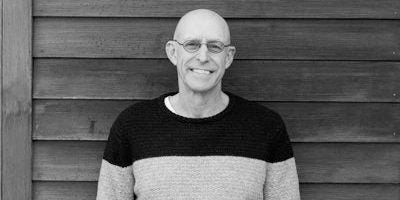 When Penguin Press author Michael Pollan set out to research how LSD and psilocybin (the active ingredient in magic mushrooms) are being used to provide relief to people suffering from difficult-to-treat conditions such as depression, addiction and anxiety, he did not intend to write what is undoubtedly his most personal book, HOW TO CHANGE YOUR MIND: What the New Science of Psychedelics Teaches Us About Consciousness, Dying, Addiction, Depression, and Transcendence, a #1 New York Times bestseller.
 It’s true I’m best known for my books about food and agriculture, but that work grew out of a deeper fascination with human engagement with the natural world, and the species we evolved with, a fascination explored in earlier books like The Botany of Desire and Second Nature. Food and beauty are two of the human desires other species have evolved to gratify, but there are other, more mysterious desires, and the human drive to change consciousness, whether mildly and routinely with plant drugs such as caffeine, or more dramatically with psychoactive mushrooms, has always fascinated me. Why do we want to do this potentially risky thing, and why did plants and fungi evolve these remarkable chemicals that affect us in this way? What do these experiences do for us, as individuals or as a society? Psychedelics are the most extreme case of this curious phenomenon, and they have been a central part of human societies for thousands of years. I wanted to find out why.
And then I began hearing about a renaissance of research into psychedelics by scientists hoping to treat cancer patients suffering from “existential distress,” addicts, people struggling with depression and so-called “healthy normals.” These researchers had found that psilocybin, the psychoactive compound in magic mushrooms, could reliably occasion a “mystical experience” in people that they deemed one of the two or three most significant experiences in their lives –comparable to the birth of a child of death of a parent. The experience had changed them in lasting ways. This was something I needed to explore. I wasn’t sure I had ever had a spiritual experience. Would one happen to me? Was there some dimension of existence or consciousness I was missing out on? Was it really possibly to change one’s mind as an adult? My journalistic curiosity soon morphed into a personal quest to explore some of the uncharted territory of both the mind and my mind.
While researching your book you decided to experience psychedelics yourself. Why? Did you have any reservations?
Well, I’ve always liked to do participatory or “immersive” journalism—I bought a cow to understand the cattle industry; built a house to understand architecture; and apprenticed myself to great chefs and bakers to learn their crafts, so embarking on a few psychedelic trips seemed like something I should do, for the edification of my readers if nothing else. I’ve always believed in the value of getting one’s hands dirty, so to speak, as a way to move beyond the usual journalistic attitudes of cynicism or world-weariness. You learn a lot more when you have some skin in the game.
It’s true I’m best known for my books about food and agriculture, but that work grew out of a deeper fascination with human engagement with the natural world, and the species we evolved with, a fascination explored in earlier books like The Botany of Desire and Second Nature. Food and beauty are two of the human desires other species have evolved to gratify, but there are other, more mysterious desires, and the human drive to change consciousness, whether mildly and routinely with plant drugs such as caffeine, or more dramatically with psychoactive mushrooms, has always fascinated me. Why do we want to do this potentially risky thing, and why did plants and fungi evolve these remarkable chemicals that affect us in this way? What do these experiences do for us, as individuals or as a society? Psychedelics are the most extreme case of this curious phenomenon, and they have been a central part of human societies for thousands of years. I wanted to find out why.
And then I began hearing about a renaissance of research into psychedelics by scientists hoping to treat cancer patients suffering from “existential distress,” addicts, people struggling with depression and so-called “healthy normals.” These researchers had found that psilocybin, the psychoactive compound in magic mushrooms, could reliably occasion a “mystical experience” in people that they deemed one of the two or three most significant experiences in their lives –comparable to the birth of a child of death of a parent. The experience had changed them in lasting ways. This was something I needed to explore. I wasn’t sure I had ever had a spiritual experience. Would one happen to me? Was there some dimension of existence or consciousness I was missing out on? Was it really possibly to change one’s mind as an adult? My journalistic curiosity soon morphed into a personal quest to explore some of the uncharted territory of both the mind and my mind.
While researching your book you decided to experience psychedelics yourself. Why? Did you have any reservations?
Well, I’ve always liked to do participatory or “immersive” journalism—I bought a cow to understand the cattle industry; built a house to understand architecture; and apprenticed myself to great chefs and bakers to learn their crafts, so embarking on a few psychedelic trips seemed like something I should do, for the edification of my readers if nothing else. I’ve always believed in the value of getting one’s hands dirty, so to speak, as a way to move beyond the usual journalistic attitudes of cynicism or world-weariness. You learn a lot more when you have some skin in the game.
 But in this case it was more personal than that. It was impossible to listen to people describe these transformative experiences—experiences that had extinguished their fear of death, surfaced buried experiences from their childhoods, shifted their priorities in life and their whole world view—without feeling the need to have such an experience myself. Would I change? Was I capable of a “mystical experience?” Would I learn something new about myself? I was particularly keen on the possibility that the experience could help me escape habitual patterns of thought and behavior, something we all struggle with. But I certainly had reservations. I had had very little experience of psychedelics—I was only 12 during the Summer of Love, which means I’m less a product of the psychedelic sixties than of the moral panic against psychedelics. They terrified me. And the night before every one of my “journeys” I was a sleepless wreck, as I rehearsed in my mind everything that could go wrong, listening to a voice in my head saying this was crazy. That voice, I came to realize, was my ego trying (selfishly) to prevent me from a having an experience that, among other things, would undermine that ego.
How did your personal experiences influence your thinking and writing?
My trips allowed me to connect better with the dozens of patients and volunteers I interviewed, helping to put some flesh on abstractions I was hearing from them, like “ego dissolution,” and “mystical experience” or “merging with nature.” It allowed us to speak one another's language about an experience often described as "ineffable." But the experiences also presented a terrific literary challenge—how do you evoke a psilocybin or LSD trip on the page, without sounding like a lunatic? (You will decide if I succeeded.)
But in this case it was more personal than that. It was impossible to listen to people describe these transformative experiences—experiences that had extinguished their fear of death, surfaced buried experiences from their childhoods, shifted their priorities in life and their whole world view—without feeling the need to have such an experience myself. Would I change? Was I capable of a “mystical experience?” Would I learn something new about myself? I was particularly keen on the possibility that the experience could help me escape habitual patterns of thought and behavior, something we all struggle with. But I certainly had reservations. I had had very little experience of psychedelics—I was only 12 during the Summer of Love, which means I’m less a product of the psychedelic sixties than of the moral panic against psychedelics. They terrified me. And the night before every one of my “journeys” I was a sleepless wreck, as I rehearsed in my mind everything that could go wrong, listening to a voice in my head saying this was crazy. That voice, I came to realize, was my ego trying (selfishly) to prevent me from a having an experience that, among other things, would undermine that ego.
How did your personal experiences influence your thinking and writing?
My trips allowed me to connect better with the dozens of patients and volunteers I interviewed, helping to put some flesh on abstractions I was hearing from them, like “ego dissolution,” and “mystical experience” or “merging with nature.” It allowed us to speak one another's language about an experience often described as "ineffable." But the experiences also presented a terrific literary challenge—how do you evoke a psilocybin or LSD trip on the page, without sounding like a lunatic? (You will decide if I succeeded.)
 I also think the experiences changed me — changed my relationship to my ego (which I no longer think of as identical to my self, but more like a "character" that needs to be managed and sometimes demoted); made me a better meditator; generally made me more open and less defended, etc. My wife Judith, who had trepidations when I embarked on this journey, eventually became quite supportive. Initially she worried that my involvement in psychedelics might somehow change me. What she didn't foresee is that it might change me for the better!
What is the biggest take-away from your experience writing this book?
Though ostensibly a book about psychedelics, HOW TO CHANGE YOUR MIND is really a book about the mind—a realm on which psychedelics happen to shine a powerful new light. Consciousness is one of the greatest mysteries there is—there is nothing of which we are more certain, and yet nothing that is further from being understood by modern science: how brains produce consciousness (if in fact they do—some believe it may exist outside of us). Yet consciousness itself is not a single thing. Psychedelics show us that, as William James said, minds are capable of multiple kinds of consciousness, separated from our everyday experience by “the filmiest of veils.” There are doors in the room of one’s mind that open onto unsuspected dimensions of mental experience. Psychedelics is only one of those doors—there are other, non-pharmacological doorknobs too, like meditation, prayer, breathing exercises, sweat lodges, vision quests, etc. But turn any one of these knobs and enter, and you realize, as I did in my “reporting” for this book, that the mind is far vaster, and the world more alive, than I ever suspected.
I also think the experiences changed me — changed my relationship to my ego (which I no longer think of as identical to my self, but more like a "character" that needs to be managed and sometimes demoted); made me a better meditator; generally made me more open and less defended, etc. My wife Judith, who had trepidations when I embarked on this journey, eventually became quite supportive. Initially she worried that my involvement in psychedelics might somehow change me. What she didn't foresee is that it might change me for the better!
What is the biggest take-away from your experience writing this book?
Though ostensibly a book about psychedelics, HOW TO CHANGE YOUR MIND is really a book about the mind—a realm on which psychedelics happen to shine a powerful new light. Consciousness is one of the greatest mysteries there is—there is nothing of which we are more certain, and yet nothing that is further from being understood by modern science: how brains produce consciousness (if in fact they do—some believe it may exist outside of us). Yet consciousness itself is not a single thing. Psychedelics show us that, as William James said, minds are capable of multiple kinds of consciousness, separated from our everyday experience by “the filmiest of veils.” There are doors in the room of one’s mind that open onto unsuspected dimensions of mental experience. Psychedelics is only one of those doors—there are other, non-pharmacological doorknobs too, like meditation, prayer, breathing exercises, sweat lodges, vision quests, etc. But turn any one of these knobs and enter, and you realize, as I did in my “reporting” for this book, that the mind is far vaster, and the world more alive, than I ever suspected.
There's a Book for That: Psychedelics
June 6, 2018
 It’s been more than 50 years since Timothy Leary popularized the phrase “turn on, tune in, drop out,” promoting LSD use during the Summer of Love. Considering Penguin Press’ current New York Times bestseller, HOW TO CHANGE YOUR MIND, by Michael Pollan, talk (and research) has now turned to the therapeutic uses of psychedelic drugs in treating anxiety and depression, among other mood disorders. And this week, Newsweek reported that “men who have previously used psychedelic drugs are less likely to act violently against their intimate partners, according to a new study published in the Journal of Psychopharmacology”. Penguin Random House publishes a range of entertaining fiction and compelling nonfiction about psychedelics. With Pollan’s book as the centerpiece, we invite you to tune in to books, personal and scientific, which educate readers by exploring treatment possibilities as well as drug myths and stereotypes:
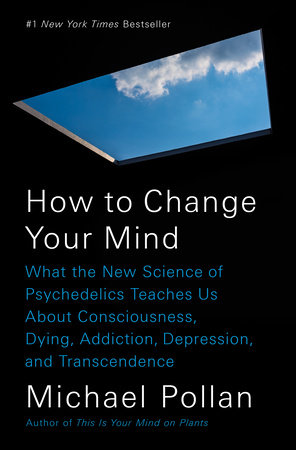 HOW TO CHANGE YOUR MIND: What the New Science of Psychedelics Teaches Us About Consciousness, Dying, Addiction, Depression, and Transcendence by Michael Pollan
A unique and elegant blend of science, memoir, travel writing, history, and medicine, How to Change Your Mind is a triumph of participatory journalism. By turns dazzling and edifying, it is the gripping account of a journey to an exciting and unexpected new frontier in our understanding of the mind, the self, and our place in the world. The true subject of Pollan’s “mental travelogue” is not just psychedelic drugs, but the eternal puzzle of human consciousness and how, in a world that offers us both struggle and beauty, we can do our best to be fully present and find meaning in our lives.
HOW TO CHANGE YOUR MIND: What the New Science of Psychedelics Teaches Us About Consciousness, Dying, Addiction, Depression, and Transcendence by Michael Pollan
A unique and elegant blend of science, memoir, travel writing, history, and medicine, How to Change Your Mind is a triumph of participatory journalism. By turns dazzling and edifying, it is the gripping account of a journey to an exciting and unexpected new frontier in our understanding of the mind, the self, and our place in the world. The true subject of Pollan’s “mental travelogue” is not just psychedelic drugs, but the eternal puzzle of human consciousness and how, in a world that offers us both struggle and beauty, we can do our best to be fully present and find meaning in our lives.
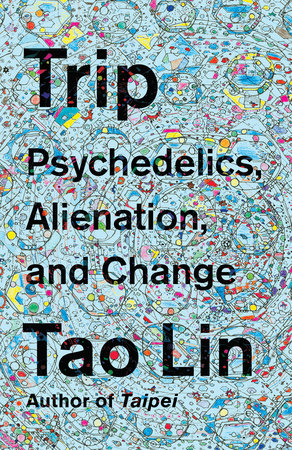 TRIP: PSYCHEDELICS, ALIENATION, AND CHANGE by Tao Lin
Part memoir, part history, part journalistic exposé, Trip is a look at psychedelic drugs, literature, and alienation from one of the twenty-first century’s most innovative novelists—The Electric Kool-Aid Acid Test for a new generation.
TRIP: PSYCHEDELICS, ALIENATION, AND CHANGE by Tao Lin
Part memoir, part history, part journalistic exposé, Trip is a look at psychedelic drugs, literature, and alienation from one of the twenty-first century’s most innovative novelists—The Electric Kool-Aid Acid Test for a new generation.
 A REALLY GOOD DAY: HOW MICRODOSING MADE A MEGA DIFFERENCE IN MY MOOD, MY MARRIAGE, AND MY LIFE by Ayelet Waldman
A memoir of a renowned writer’s struggle with mood storms that led her to try a remedy as drastic as it is forbidden: microdoses of LSD. The quest to have “a really good day” provides a window into the complex world of a once-infamous drug seen through new eyes.
As Waldman charts her experience over the course of a month, during which she achieved a newfound feeling of serenity, she also explores the history and mythology of LSD, the cutting-edge research into the drug, and the byzantine policies that control it. Drawing on her experience as a federal public defender, and as the mother of teenagers, and her research into the therapeutic value of psychedelics, Waldman has produced a book that is candid, revealing and completely enthralling.
A REALLY GOOD DAY: HOW MICRODOSING MADE A MEGA DIFFERENCE IN MY MOOD, MY MARRIAGE, AND MY LIFE by Ayelet Waldman
A memoir of a renowned writer’s struggle with mood storms that led her to try a remedy as drastic as it is forbidden: microdoses of LSD. The quest to have “a really good day” provides a window into the complex world of a once-infamous drug seen through new eyes.
As Waldman charts her experience over the course of a month, during which she achieved a newfound feeling of serenity, she also explores the history and mythology of LSD, the cutting-edge research into the drug, and the byzantine policies that control it. Drawing on her experience as a federal public defender, and as the mother of teenagers, and her research into the therapeutic value of psychedelics, Waldman has produced a book that is candid, revealing and completely enthralling.
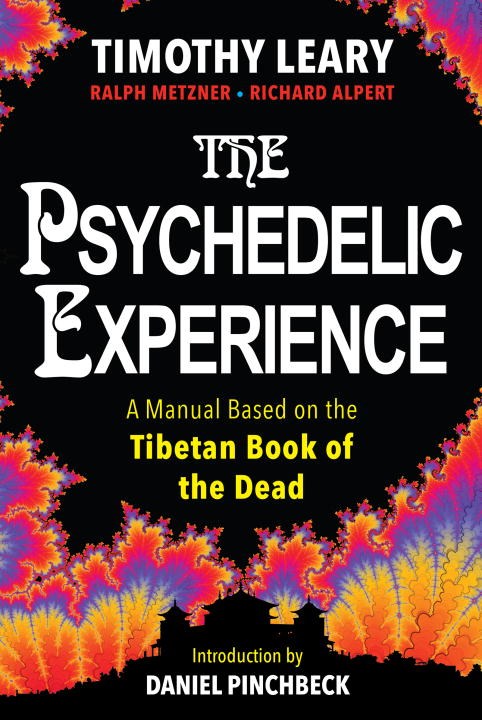 THE PSYCHEDELIC EXPERIENCE: A MANUAL BASED ON THE TIBETAN BOOK OF THE DEAD by Timothy Leary
The Psychedelic Experience, created in the movement’s early years by the prophetic shaman-professors Timothy Leary, Ralph Metzner, and Richard Alpert (Ram Dass), is a foundational text that serves as a model and a guide for all subsequent mind-expanding inquiries. In this wholly unique book, the authors provide an interpretation of an ancient sacred manuscript, the Tibetan Book of the Dead, from a psychedelic perspective. The Psychedelic Experience describes their discoveries in broadening spiritual consciousness through a combination of Tibetan meditation techniques and psychotropic substances.
THE PSYCHEDELIC EXPERIENCE: A MANUAL BASED ON THE TIBETAN BOOK OF THE DEAD by Timothy Leary
The Psychedelic Experience, created in the movement’s early years by the prophetic shaman-professors Timothy Leary, Ralph Metzner, and Richard Alpert (Ram Dass), is a foundational text that serves as a model and a guide for all subsequent mind-expanding inquiries. In this wholly unique book, the authors provide an interpretation of an ancient sacred manuscript, the Tibetan Book of the Dead, from a psychedelic perspective. The Psychedelic Experience describes their discoveries in broadening spiritual consciousness through a combination of Tibetan meditation techniques and psychotropic substances.
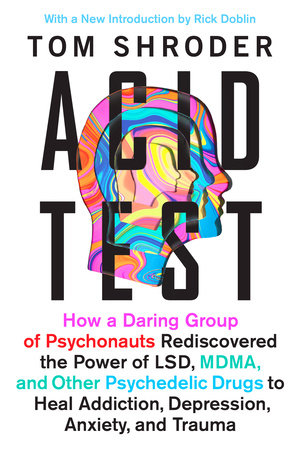 ACID TEST: LSD, ECSTASY, AND THE POWER TO HEAL by Tom Shroder
“A book that should start a long-overdue national conversation.” —Dave Barry
While LSD and MDMA have proven extraordinarily effective in treating anxiety disorders such as PTSD, they still remain off-limits to the millions who might benefit from them. Through the stories of three very different men, award-winning journalist Tom Shroder covers the drugs’ roller-coaster history from their initial reception in the 1950s to the negative stereotypes that persist today. At a moment when popular opinion is rethinking the potential benefits of some illegal drugs, and with new research coming out every day, Acid Test is a fascinating and informative must-read.
ACID TEST: LSD, ECSTASY, AND THE POWER TO HEAL by Tom Shroder
“A book that should start a long-overdue national conversation.” —Dave Barry
While LSD and MDMA have proven extraordinarily effective in treating anxiety disorders such as PTSD, they still remain off-limits to the millions who might benefit from them. Through the stories of three very different men, award-winning journalist Tom Shroder covers the drugs’ roller-coaster history from their initial reception in the 1950s to the negative stereotypes that persist today. At a moment when popular opinion is rethinking the potential benefits of some illegal drugs, and with new research coming out every day, Acid Test is a fascinating and informative must-read.
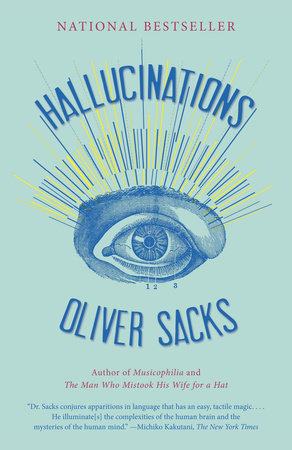 HALLUCINATIONS by Oliver Sacks
Here, with his usual elegance, curiosity, and compassion, Dr. Sacks weaves together stories of his patients and of his own mind-altering experiences to illuminate what hallucinations tell us about the organization and structure of our brains, how they have influenced every culture’s folklore and art, and why the potential for hallucination is present in us all, a vital part of the human condition.
HALLUCINATIONS by Oliver Sacks
Here, with his usual elegance, curiosity, and compassion, Dr. Sacks weaves together stories of his patients and of his own mind-altering experiences to illuminate what hallucinations tell us about the organization and structure of our brains, how they have influenced every culture’s folklore and art, and why the potential for hallucination is present in us all, a vital part of the human condition.
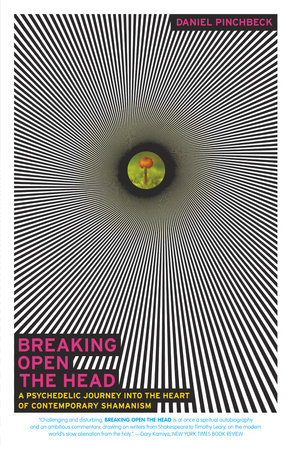 BREAKING OPEN THE HEAD: A PSYCHEDELIC JOURNEY INTO THE HEART OF CONTEMPORARY SHAMANISM by Daniel Pinchbeck
Breaking Open the Head is brave participatory journalism at its best, a vivid account of psychic and intellectual experiences that opened doors in the wall of Western rationalism and completed Daniel Pinchbeck's personal transformation from a jaded Manhattan journalist to shamanic initiate and grateful citizen of the cosmos.
BREAKING OPEN THE HEAD: A PSYCHEDELIC JOURNEY INTO THE HEART OF CONTEMPORARY SHAMANISM by Daniel Pinchbeck
Breaking Open the Head is brave participatory journalism at its best, a vivid account of psychic and intellectual experiences that opened doors in the wall of Western rationalism and completed Daniel Pinchbeck's personal transformation from a jaded Manhattan journalist to shamanic initiate and grateful citizen of the cosmos.
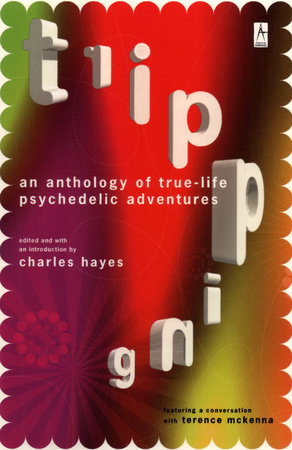 TRIPPING: AN ANTHOLOGY OF TRUE-LIFE PSYCHEDELIC ADVENTURES by Charles Hayes
In Tripping, Charles Hayes has gathered fifty narratives about unforgettable psychedelic experiences from an international array of subjects representing all walks of life—respectable Baby Boomers, aging hippies, young ravers, and accomplished writers such as John Perry Barlow, Anne Waldman, Robert Charles Wilson, Paul Devereux, and Tim Page. Taking a balanced, objective approach, the book depicts a broad spectrum of altered states, from the sublime to the terrifying.
For more on these and related titles visit Psychedelics
TRIPPING: AN ANTHOLOGY OF TRUE-LIFE PSYCHEDELIC ADVENTURES by Charles Hayes
In Tripping, Charles Hayes has gathered fifty narratives about unforgettable psychedelic experiences from an international array of subjects representing all walks of life—respectable Baby Boomers, aging hippies, young ravers, and accomplished writers such as John Perry Barlow, Anne Waldman, Robert Charles Wilson, Paul Devereux, and Tim Page. Taking a balanced, objective approach, the book depicts a broad spectrum of altered states, from the sublime to the terrifying.
For more on these and related titles visit Psychedelics
There’s a Book for That! is brought to you by Penguin Random House’s Sales department. Please follow our Tumblr by clicking here—and share this link with your accounts: theresabookforthat.tumblr.com. Thank you! Did you see something on the news or read about something on your commute? Perhaps you noticed something trending on Twitter? Did you think: “There’s a book for that!”? Then please, send it our way at theresabookforthat@penguinrandomhouse.com